If it is an indispensable part to make rubber raw rubber into a variety of mature rubber products, what are the links of rubber mixing? The following is a professional rubber manufacturer to introduce you to the four major steps of rubber mixing.
First, the choice of mixing materials, in the process of mixing, due to the low cohesion between the rubber molecules, the high-strength and high-temperature silica filler becomes the most important compounding agent for rubber. When other compounding agents are used, Need to consider the requirements of high temperature resistance, that is, under the application conditions of rubber, they should not be volatilized, decomposed, charred or discolored, etc. In order to maintain the heat resistance of raw rubber, the silicon bond is reduced by acid and alkali, and the mixture is broken and mixed. To prevent the introduction of foreign acids and alkalis, it is necessary to remove the acidic substances generated by the decomposition of the peroxide vulcanizing agent in time.
Second, in the mixing of the raw rubber and other ingredients into the vacuum kneader, the temperature is not high at the beginning, during the stirring process, by the temperature of the temperature slowly reached 155-160 degrees, It will take another half hour.
Third, put the cooked glue in the open mill to smooth and roll into a roll. Just take care not to get dirty. The number of rolls only needs 2-3 rings.
Fourth, after smoothing, it should be cooled. The time is about 3-4 hours. Then, through the match net, the glue is filtered again. The purpose is to filter out some solid materials inside the glue.
2019-10-30
2019-09-29
Several factors that cause the rubber tube to age
Rubber tubes will gradually appear aging during daily use, so what are the factors that cause the rubber tube to age? As a professional rubber manufacturer
(1) Oxygen: Oxygen undergoes a radical chain-locking reaction with rubber molecules in a rubber tube, and the molecular chain is broken or excessively crosslinked, causing a change in rubber properties. Oxidation is one of the important reasons for rubber aging.

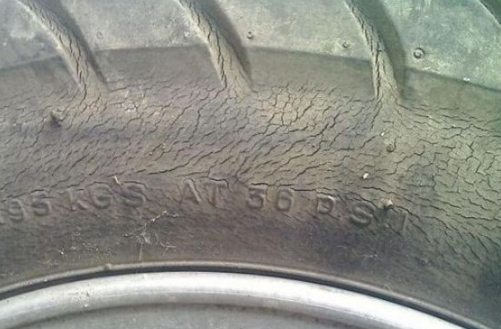
(2) Ozone: The chemical activity of ozone is much higher than that of oxygen, and it is destructive. It also breaks the molecular chain, but the effect of ozone on rubber varies with the deformation of rubber. When it is used as a rubber for deformation (mainly unsaturated rubber), a crack perpendicular to the direction of stress action occurs, that is, “ozone cracking”; when it acts on a deformed rubber, only an oxide film is formed on the surface without cracking.
(3) Heat: Increasing the temperature may cause thermal cracking or thermal crosslinking of the rubber. But the basic role of heat is activation. Increasing the rate of oxygen diffusion and activating the oxidation reaction to accelerate the oxidation reaction rate of the rubber is a ubiquitous phenomenon of aging – thermal aging.
(4) Light: The shorter the light wave, the greater the energy. What is damaging to rubber is the higher energy of ultraviolet light. In addition to ultraviolet rays directly causing the breakage and cross-linking of rubber molecular chains, rubber generates free radicals by absorbing light energy, which initiates and accelerates the oxidation chain reaction process. Ultraviolet light plays a role in heating. Another feature of light action (unlike heat) is that it mainly occurs on the surface of the oak. For samples with high gel content, there will be reticular cracks on both sides, the so-called “outer layer cracking”.
(5) Mechanical stress: Under the repeated action of mechanical stress, the rubber tube molecular chain will be broken to form a free radical, which will initiate the oxidative chain reaction and form a force chemical process. Mechanically broken molecular chains and mechanically activated oxidation processes. Which one can prevail depends on the conditions in which it is located. In addition, it is easy to cause ozone cracking under stress.
(6) Moisture: The effect of moisture has two aspects: when the rubber tube is exposed to moisture or immersed in water, it is easily destroyed. This is because the water-soluble substance and the water-clearing group in the rubber are extracted by water. Caused by hydrolysis or absorption. Especially in the alternating action of water immersion and atmospheric exposure, the rubber damage will be accelerated. However, under certain circumstances, moisture does not have a destructive effect on rubber, and even has the effect of delaying aging.nergy radiation, electricity and biology.

The above are the main reasons why I have summarized the rubber tube aging. I hope that everyone can start from these aspects to avoid the aging of the rubber tube.
2019-09-10
Why do rubber products turn white?
In life, many people have certainly seen the phenomenon of whitening after using rubber products for a period of time. For example, in the case of high humidity, the paint tends to be white. So why are rubber products white? How to avoid whitening rubber products?
The reason for the whitening of rubber – blooming

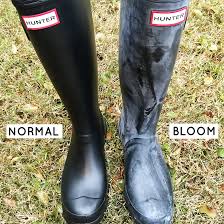
Blowing refers to the phenomenon that a liquid or solid compounding agent is moved from the inside of the rubber to the appearance of the rubber to cause whitening of the rubber product. The way of rubber frosting is summarized and divided into three types. That is, dusting, spraying wax, and spraying oil (also called oozing).
Powder spraying is a powder compounding agent such as a vulcanizing agent, a promoter, an active agent, an antioxidant, a filler, and the like, which are separated from the rubber surface to form a layer of powder.
The wax spray is a wax such as white wax or glaze wax which is separated from the rubber surface to form a wax film.
The fuel injection is a liquid compounding agent such as a softener, a tackifier, a lubricant, a plasticizer, etc., which is separated from the rubber surface to form a layer of oil. The way rubber is sprayed on the surface is sometimes presented in one way, sometimes in two or three ways.
How to avoid rubber products bloom

(1) Formulation planning is reasonable to avoid being too full
(2) Technical operation to pay attention to avoid errors
(3) Rubber raw materials and finished products should be taken care of during storage to avoid aging and moisture.
(2) Technical operation to pay attention to avoid errors
(3) Rubber raw materials and finished products should be taken care of during storage to avoid aging and moisture.
2019-06-26
Do these things to keep your car away from puncture
For our car owners, don't simply use the car as a means of transportation, but also as a part of the family. Always care and love it. Only then will we be more comfortable. As a professional rubber manufacturer, let me explain the precautions in the daily maintenance of tires.
1, often check the tires can play a role in eliminating the hidden danger of puncture. The correct approach is to check the air pressure of all tires under cooling conditions (including spare tires) at least once a month. Experts said that the average tire pressure in summer is between 2.3 and 2.5. Ordinary cars, if full (5 people), the tire pressure is adjusted to about 2.5 is more suitable; generally two people, the tire pressure value is 2.3 is normal.
2. Always remove stones or foreign objects in the groove of the tread pattern to avoid deformation of the tire crown. Check the tire sidewall for scratches, punctures, and whether the cord is exposed. If it should be replaced in time.
3. For vehicles that are often on the highway, it is best to change the tires every 10,000 kilometers
4. Under any circumstance, do not exceed the reasonable speed of driving conditions and legal restrictions. If you turn and encounter obstacles such as potholes in front, please slow down.
5. All tires should be used within the service life range (the service life of car tires should be 2~3 years or about 60,000 kilometers). If the tires exceed the service life or have been seriously worn, the new tires should be replaced in time.
6, now many professional tire shops or professional car repair service stores have nitrogen service for tires. Nitrogen can not only prolong the service life of the tire, but also keep the tire pressure stable for a long time, reduce the chance of puncture and increase the safety of the vehicle.
7. Install the tire pressure tracking system (TPMS). This is an industry-recognized effective method to prevent vehicle punctures. When the tire's air pressure and temperature are different from the set standard value, the monitor will automatically alarm to eliminate the accident in the bud.
In short, puncture is a complex phenomenon of tire damage, there is a certain chance, but strengthening daily maintenance is still the only way to effectively prevent puncture.
1, often check the tires can play a role in eliminating the hidden danger of puncture. The correct approach is to check the air pressure of all tires under cooling conditions (including spare tires) at least once a month. Experts said that the average tire pressure in summer is between 2.3 and 2.5. Ordinary cars, if full (5 people), the tire pressure is adjusted to about 2.5 is more suitable; generally two people, the tire pressure value is 2.3 is normal.
2. Always remove stones or foreign objects in the groove of the tread pattern to avoid deformation of the tire crown. Check the tire sidewall for scratches, punctures, and whether the cord is exposed. If it should be replaced in time.
3. For vehicles that are often on the highway, it is best to change the tires every 10,000 kilometers
4. Under any circumstance, do not exceed the reasonable speed of driving conditions and legal restrictions. If you turn and encounter obstacles such as potholes in front, please slow down.
5. All tires should be used within the service life range (the service life of car tires should be 2~3 years or about 60,000 kilometers). If the tires exceed the service life or have been seriously worn, the new tires should be replaced in time.
6, now many professional tire shops or professional car repair service stores have nitrogen service for tires. Nitrogen can not only prolong the service life of the tire, but also keep the tire pressure stable for a long time, reduce the chance of puncture and increase the safety of the vehicle.
7. Install the tire pressure tracking system (TPMS). This is an industry-recognized effective method to prevent vehicle punctures. When the tire's air pressure and temperature are different from the set standard value, the monitor will automatically alarm to eliminate the accident in the bud.
In short, puncture is a complex phenomenon of tire damage, there is a certain chance, but strengthening daily maintenance is still the only way to effectively prevent puncture.
Several major reasons for tire bursting
The hot summer is coming, many people will worry about the tire burst. Let's analyze the main reasons for the tire burst.
1. The temperature is high. When the car is driving under high-temperature conditions, the tire is prone to deformation due to thermal expansion and contraction, and the tensile strength will decrease. In addition, the tire will continue to heat up while driving, but the heat dissipation is relatively slow, so the air pressure will follow. The increase is caused, resulting in a puncture of the carcass too thin.
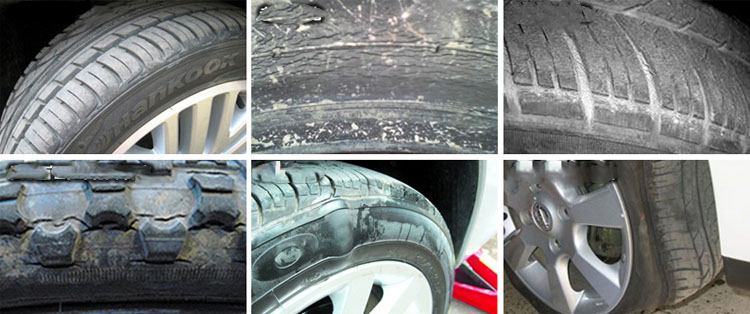
2, abnormal tire pressure. Abnormal tire pressure can cause problems such as partial wear of the tire, reduced handling and comfort, and increased fuel consumption. When the tire pressure is insufficient, the sidewall of the tire is easily bent and broken to cause a burst. If the tire pressure is too high, the tire's defects (such as damaged parts) will burst during high-speed driving.
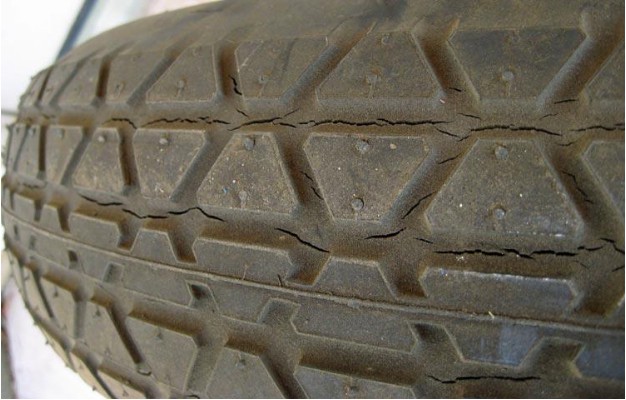
3. The tires are in poor condition. Excessive wear, ageing, cracking and trauma of the tires are also one of the causes of punctures. Like the block after long-term friction with the ground, the pattern gradually becomes shallower and should be stopped immediately when it wears to the replacement mark.
4. The road conditions are not good. The road conditions have a great influence on the tires, such as uneven roads or gravel. When the vehicle is driving at high speed, the tire is rubbed against sharp stones or other sharp objects on the road surface, causing air leakage and puncture, which is also a common cause of an accident.
5. Speeding. The speed limit of each tire is determined by the strict calculation of the manufacturer. When the speed is running, the tire temperature will rise rapidly, accelerate the ageing of the rubber, and easily cause delamination and bursting. In addition, there is authoritative data that a car has a puncture accident when driving at speeds of more than 160 kilometers per hour, and the death rate of drivers and passengers is 100%.
6, the vehicle is overloaded. The overload of the vehicle is self-evident for the tires. In particular, we often see some large trucks overloaded on the highway when the tires are more prone to puncture accidents.
1. The temperature is high. When the car is driving under high-temperature conditions, the tire is prone to deformation due to thermal expansion and contraction, and the tensile strength will decrease. In addition, the tire will continue to heat up while driving, but the heat dissipation is relatively slow, so the air pressure will follow. The increase is caused, resulting in a puncture of the carcass too thin.
2, abnormal tire pressure. Abnormal tire pressure can cause problems such as partial wear of the tire, reduced handling and comfort, and increased fuel consumption. When the tire pressure is insufficient, the sidewall of the tire is easily bent and broken to cause a burst. If the tire pressure is too high, the tire's defects (such as damaged parts) will burst during high-speed driving.
3. The tires are in poor condition. Excessive wear, ageing, cracking and trauma of the tires are also one of the causes of punctures. Like the block after long-term friction with the ground, the pattern gradually becomes shallower and should be stopped immediately when it wears to the replacement mark.
4. The road conditions are not good. The road conditions have a great influence on the tires, such as uneven roads or gravel. When the vehicle is driving at high speed, the tire is rubbed against sharp stones or other sharp objects on the road surface, causing air leakage and puncture, which is also a common cause of an accident.
5. Speeding. The speed limit of each tire is determined by the strict calculation of the manufacturer. When the speed is running, the tire temperature will rise rapidly, accelerate the ageing of the rubber, and easily cause delamination and bursting. In addition, there is authoritative data that a car has a puncture accident when driving at speeds of more than 160 kilometers per hour, and the death rate of drivers and passengers is 100%.
6, the vehicle is overloaded. The overload of the vehicle is self-evident for the tires. In particular, we often see some large trucks overloaded on the highway when the tires are more prone to puncture accidents.
Different classifications of oil resistant rubber sheets
Oil-resistant rubber sheets are an important type of rubber sheets, and can be roughly classified into three types according to their different characteristics.
Class A oil-resistant rubber sheet, that is, general oil-resistant rubber sheet, is made of recycled nitrile rubber and various fillers. The fabric can be clothed in the middle to improve the physical and mechanical properties of the oil-resistant rubber sheet. The main characteristics of Class A oil-resistant rubber sheets are oil resistance and wear resistance, water resistance, shock resistance and anti-skid performance. It is mainly used in some mechanical processing, manufacturing industries, automobile and shipbuilding industries, chemical enterprises, etc. It is mainly used for paving the floor and countertops, and it is resistant to oil, water and skid. It avoids direct contact with the ground and causes product damage and protects the ground or The countertop is damaged by the collision of heavy objects.
The B-type oil-resistant rubber sheet is made of 30%~60% nitrile rubber plus styrene-butadiene rubber and filler. The price is moderate. Class B oil-resistant rubber sheets have good physical and mechanical properties and medium oil resistance; they have the advantages of sealing, wear resistance, resistance to friction and low compression deformation. It can be used as seal in oil medium (oil, hydraulic oil, lubricating oil, vegetable oil). It is mainly used for processing of gaskets, equipment lining, sandblasting lining, etc., insulating rubber sheet and contact with grease. Paving for long-term use on work benches, floors, and electronic products.
Class C oil resistant rubber sheets are vulcanized by more than 70% nitrile rubber and filler. Class C oil resistant rubber sheet has excellent oil resistance and high temperature resistance, and can be used in oil medium of 120 degree high temperature (oil, diesel, gasoline, lubricating oil). Since the oil-resistant seal standard parts are directly produced by the seal manufacturer, only some non-standard large-piece seals can be used with the C-type oil-resistant rubber sheet. Therefore, the C-type oil-resistant rubber sheet has a narrower range and is more expensive. It is mainly used to punch some high oil resistant gaskets and is used as a tank and oil pipeline seal.
Class A oil-resistant rubber sheet, that is, general oil-resistant rubber sheet, is made of recycled nitrile rubber and various fillers. The fabric can be clothed in the middle to improve the physical and mechanical properties of the oil-resistant rubber sheet. The main characteristics of Class A oil-resistant rubber sheets are oil resistance and wear resistance, water resistance, shock resistance and anti-skid performance. It is mainly used in some mechanical processing, manufacturing industries, automobile and shipbuilding industries, chemical enterprises, etc. It is mainly used for paving the floor and countertops, and it is resistant to oil, water and skid. It avoids direct contact with the ground and causes product damage and protects the ground or The countertop is damaged by the collision of heavy objects.
The B-type oil-resistant rubber sheet is made of 30%~60% nitrile rubber plus styrene-butadiene rubber and filler. The price is moderate. Class B oil-resistant rubber sheets have good physical and mechanical properties and medium oil resistance; they have the advantages of sealing, wear resistance, resistance to friction and low compression deformation. It can be used as seal in oil medium (oil, hydraulic oil, lubricating oil, vegetable oil). It is mainly used for processing of gaskets, equipment lining, sandblasting lining, etc., insulating rubber sheet and contact with grease. Paving for long-term use on work benches, floors, and electronic products.
The characteristics and advantages of colored rubber sheets
Color rubber floor mat is a new type of floor covering material. Compared with traditional cement floor, wood floor, marble floor and ordinary rubber board, the color rubber floor mat has obvious elastic advantages. The color rubber floor mat is made of high-quality, high-pressure production equipment for rubber mats. Rubber mats have many commonalities with plastic floors such as flooring, plastic runways, and outdoor plastic basketball courts, but rubber mats also have their own unique characteristics. Specifically, the colored rubber mat has the following characteristics:
First, The color rubber floor mat has strong pressure resistance, impact resistance, large friction coefficient, elasticity, shock absorption and anti-skid, and has strong protective performance.
Second, the color rubber mat has good weather resistance and temperature resistance, and the insulating rubber sheet also has good anti-ultraviolet characteristics, which can meet the needs of different places. At present, rubber mats are widely used in kindergartens, schools, nursing homes, gyms, stadiums, subway passages, public walkways and other places.
Third, the color rubber floor mat is safe and environmentally friendly. The rubber floor mat is safe and non-toxic, so you don't have to worry about negative harm to the human body, and it will not breed microorganisms and be healthier.
Fourth, the color rubber floor mats are various in specifications, rich in color, non-reflective, and beautiful in appearance. They can be combined to form a variety of patterns to meet the needs of most people.
The rubber mats produced by our company are very dense and durable, and can be used not only indoors, but also outdoors, and have unique advantages compared with other materials. For more details and prices of rubber sheets, please call the company hotline for consultation. We will serve the new and old customers with high quality products and sincere attitude.
First, The color rubber floor mat has strong pressure resistance, impact resistance, large friction coefficient, elasticity, shock absorption and anti-skid, and has strong protective performance.
Second, the color rubber mat has good weather resistance and temperature resistance, and the insulating rubber sheet also has good anti-ultraviolet characteristics, which can meet the needs of different places. At present, rubber mats are widely used in kindergartens, schools, nursing homes, gyms, stadiums, subway passages, public walkways and other places.
Third, the color rubber floor mat is safe and environmentally friendly. The rubber floor mat is safe and non-toxic, so you don't have to worry about negative harm to the human body, and it will not breed microorganisms and be healthier.
Fourth, the color rubber floor mats are various in specifications, rich in color, non-reflective, and beautiful in appearance. They can be combined to form a variety of patterns to meet the needs of most people.
The rubber mats produced by our company are very dense and durable, and can be used not only indoors, but also outdoors, and have unique advantages compared with other materials. For more details and prices of rubber sheets, please call the company hotline for consultation. We will serve the new and old customers with high quality products and sincere attitude.
History of rubber applications
In 1819, the Scottish chemist Ma Jintoxi discovered that the rubber was solubilized in a volatile oil extracted from coal tar. As a result, people used coal tar, turpentine, and oil to dissolve rubber, and obtained a large number of rainproof products.
In 1839, American Charlie Goodyear invented the rubber vulcanization technology to solve the problem that the rubber softens and becomes sticky at high temperatures, and the temperature is low and hard and brittle. Rubber has always been omnipotent and played an indispensable role in the era of the industrial revolution. Rubber washers are used on the steam engine, and the rubber is made into an eraser, a balloon, a tape, a waterproof boot, an inflatable boat mat, and the like.
In 1845, Thomson invented the inflatable rubber tube sleeve on the car and obtained the patent.
In 1875, the chemist Buchada made an artificial rubber.
In 1888, the British Dunluc became a steam tire.
1890 tires for bicycles,
In Germany, for the first time in 1917, synthetic rubber was produced from 2,3-dimethyl-1,3-butadiene, which was named methyl rubber W and methyl rubber H.
From 1927 to 1928, J.C. Patrick of the United States first synthesized polysulfide rubber (polytetraethylene sulfide). W.H. Carothers synthesized 2-chloro-1,3-butadiene by the method of J.A. Newland to obtain a neoprene rubber.
In 1931 DuPont carried out a small production. The Soviet Union used the method of С.Β. Lebedev to synthesize butadiene from alcohol, and used sodium metal as a catalyst to carry out liquid phase bulk polymerization to obtain sodium butadiene rubber. In 1931, a 10,000-ton production unit was built. During the same period, Germany synthesized butadiene from acetylene and sodium as a catalyst to prepare sodium butadiene rubber.
In the early 1930s, the establishment of the macromolecular long-chain structure theory of Germany H. Staudinger (1932) and the chain polymerization theory of the Soviet Union H.H. Semenov (1934) laid the foundation for the polymer discipline. At the same time, the polymerization process and rubber quality have also been significantly improved. Representative rubber types that have appeared during this period are: styrene-butadiene rubber obtained by copolymerization of butadiene and styrene, and nitrile rubber obtained by copolymerization of butadiene and acrylonitrile.
In 1935, the German company was first producing nitrile rubber.
In 1937, the company built a styrene-butadiene rubber industrial production plant at the Buna Chemical Plant. Due to its excellent comprehensive properties, styrene-butadiene rubber is still the largest variety of synthetic rubber, and nitrile rubber is an oil-resistant rubber. It is still the main type of special rubber.
In the early 1940s, due to the urgent need for war, the development and commissioning of butyl rubber technology was promoted.
In 1943, the United States began trial production of butyl rubber. By 1944, the annual production of butyl rubber in the United States and Canada was 1,320 tons and 2,480 tons, respectively. Butyl rubber is a very airtight synthetic rubber that is best suited for tire inner tubes. Later, there were many new varieties of specialty rubber. For example, General Electric Company of the United States began producing silicone rubber in 1944, and Germany and the United Kingdom produced polyurethane rubber (see polyurethane) in the early 1940s. -
After the Second World War, various synthetic rubbers came into being. For example, sodium butadiene rubber obtained by polymerizing butadiene using sodium as a catalyst, styrene-butadiene rubber obtained by polymerization of butadiene and styrene, neoprene rubber obtained by polymerization of chloroprene, and the like are synthesized.
In 1955, isoprene was polymerized using a catalyst used by Ziegler in polymerizing ethylene. For the first time, synthetic natural rubber with the same structure as natural rubber was synthesized by artificial method.
Ethylene-propylene rubber, which was produced from the two simplest monomers, ethylene and propylene, was also successful. In addition, various rubbers with special properties have appeared.
In 1839, American Charlie Goodyear invented the rubber vulcanization technology to solve the problem that the rubber softens and becomes sticky at high temperatures, and the temperature is low and hard and brittle. Rubber has always been omnipotent and played an indispensable role in the era of the industrial revolution. Rubber washers are used on the steam engine, and the rubber is made into an eraser, a balloon, a tape, a waterproof boot, an inflatable boat mat, and the like.
In 1845, Thomson invented the inflatable rubber tube sleeve on the car and obtained the patent.
In 1875, the chemist Buchada made an artificial rubber.
In 1888, the British Dunluc became a steam tire.
1890 tires for bicycles,
In Germany, for the first time in 1917, synthetic rubber was produced from 2,3-dimethyl-1,3-butadiene, which was named methyl rubber W and methyl rubber H.
From 1927 to 1928, J.C. Patrick of the United States first synthesized polysulfide rubber (polytetraethylene sulfide). W.H. Carothers synthesized 2-chloro-1,3-butadiene by the method of J.A. Newland to obtain a neoprene rubber.
In the early 1930s, the establishment of the macromolecular long-chain structure theory of Germany H. Staudinger (1932) and the chain polymerization theory of the Soviet Union H.H. Semenov (1934) laid the foundation for the polymer discipline. At the same time, the polymerization process and rubber quality have also been significantly improved. Representative rubber types that have appeared during this period are: styrene-butadiene rubber obtained by copolymerization of butadiene and styrene, and nitrile rubber obtained by copolymerization of butadiene and acrylonitrile.
In 1937, the company built a styrene-butadiene rubber industrial production plant at the Buna Chemical Plant. Due to its excellent comprehensive properties, styrene-butadiene rubber is still the largest variety of synthetic rubber, and nitrile rubber is an oil-resistant rubber. It is still the main type of special rubber.
In the early 1940s, due to the urgent need for war, the development and commissioning of butyl rubber technology was promoted.
In 1943, the United States began trial production of butyl rubber. By 1944, the annual production of butyl rubber in the United States and Canada was 1,320 tons and 2,480 tons, respectively. Butyl rubber is a very airtight synthetic rubber that is best suited for tire inner tubes. Later, there were many new varieties of specialty rubber. For example, General Electric Company of the United States began producing silicone rubber in 1944, and Germany and the United Kingdom produced polyurethane rubber (see polyurethane) in the early 1940s. -
After the Second World War, various synthetic rubbers came into being. For example, sodium butadiene rubber obtained by polymerizing butadiene using sodium as a catalyst, styrene-butadiene rubber obtained by polymerization of butadiene and styrene, neoprene rubber obtained by polymerization of chloroprene, and the like are synthesized.
In 1955, isoprene was polymerized using a catalyst used by Ziegler in polymerizing ethylene. For the first time, synthetic natural rubber with the same structure as natural rubber was synthesized by artificial method.
Ethylene-propylene rubber, which was produced from the two simplest monomers, ethylene and propylene, was also successful. In addition, various rubbers with special properties have appeared.
History of rubber being discovered
In Central and South America, rubber has been collected long ago. Central American croquet games use rubber balls. Some of the rubber balls unearthed there can be traced back to 1600 BC. According to the literature, the elasticity of these balls is excellent, and the visiting Spaniards have even thought that these balls have possession of evil spirits.
Rubber is also used as a strap for bolting a wooden handle to a stone or metal fixture, as well as a filler for the handle. The Mayans know how to make shoes from rubber.
Although Native Americans do not officially vulcanize rubber like modern people, they can still use organics to achieve similar effects, such as mixing unprocessed emulsions into different types of sap or some vine juices (special It is a certain species of Convolvulaceae).
Some indigenous people in Brazil use rubber to make waterproof fabrics. There have been rumors that the Portuguese brought these clothes back to the motherland, frightened the fellow countrymen, and were accused of witchcraft and tried.
After the rubber was introduced into the UK, it was found that this material was very effective in erasing the traces left by the pencil. So now the rubber English rubber is also used to describe the eraser. Interestingly, Americans nowadays use the eraser as an eraser, but rubber is used to describe condoms.
In 1493, the great Spanish explorer Columbus led the team to the South American continent for the first time. Here, the Spaniards saw Indian children and young people playing a game, singing songs throwing each other a small ball, which can rebound very high after landing, such as pinching in the hand will feel sticky And have a smoky flavor. The Spaniards also saw that the Indians applied some white thick liquid to the clothes, and the clothes were not rainy on rainy days; they also applied this white thick liquid to the feet, and the rain would not wet the feet. . As a result, the Spaniards initially learned about the elasticity and water resistance of rubber, but did not really understand the source of rubber.
In 1693, the French scientist Lacan reached South America and saw the indigenous people playing this kind of ball. The thinking and vision of scientists and soldiers are different. After searching for this kind of ball, it is known that this kind of ball is a kind of chopping. The Indians call it a "rubber" tree and the thick liquid that flows out is not made.
In 1736, French scientist Kang Damin brought back detailed information about rubber trees from Peru and published the "Travel History of South America in the Mainland". The book details the origin of rubber trees, the method of collecting latex and the utilization of rubber, which caused people's Pay attention to it.
In 1763, the French Mecca invented a solvent that softened the rubber.
In 1770, the British chemist J. Priestley discovered that rubber could be used to erase pencil writing. At that time, the material used for this purpose was called rubber, and the term has been used until now.
Rubber is also used as a strap for bolting a wooden handle to a stone or metal fixture, as well as a filler for the handle. The Mayans know how to make shoes from rubber.
Although Native Americans do not officially vulcanize rubber like modern people, they can still use organics to achieve similar effects, such as mixing unprocessed emulsions into different types of sap or some vine juices (special It is a certain species of Convolvulaceae).
Some indigenous people in Brazil use rubber to make waterproof fabrics. There have been rumors that the Portuguese brought these clothes back to the motherland, frightened the fellow countrymen, and were accused of witchcraft and tried.
After the rubber was introduced into the UK, it was found that this material was very effective in erasing the traces left by the pencil. So now the rubber English rubber is also used to describe the eraser. Interestingly, Americans nowadays use the eraser as an eraser, but rubber is used to describe condoms.
In 1493, the great Spanish explorer Columbus led the team to the South American continent for the first time. Here, the Spaniards saw Indian children and young people playing a game, singing songs throwing each other a small ball, which can rebound very high after landing, such as pinching in the hand will feel sticky And have a smoky flavor. The Spaniards also saw that the Indians applied some white thick liquid to the clothes, and the clothes were not rainy on rainy days; they also applied this white thick liquid to the feet, and the rain would not wet the feet. . As a result, the Spaniards initially learned about the elasticity and water resistance of rubber, but did not really understand the source of rubber.
In 1693, the French scientist Lacan reached South America and saw the indigenous people playing this kind of ball. The thinking and vision of scientists and soldiers are different. After searching for this kind of ball, it is known that this kind of ball is a kind of chopping. The Indians call it a "rubber" tree and the thick liquid that flows out is not made.
In 1736, French scientist Kang Damin brought back detailed information about rubber trees from Peru and published the "Travel History of South America in the Mainland". The book details the origin of rubber trees, the method of collecting latex and the utilization of rubber, which caused people's Pay attention to it.
In 1763, the French Mecca invented a solvent that softened the rubber.
In 1770, the British chemist J. Priestley discovered that rubber could be used to erase pencil writing. At that time, the material used for this purpose was called rubber, and the term has been used until now.
2019-06-14
What's the difference between rubber and plastic?
Rubber materials (aka elastomers) generally have greater elastic elongation range than plastics. For example natural latex rubber can have an elongation of 700%.
Rubber materials are usually cross-linked molecular chains while the (meltable) thermoplastics are not cross linked. However, thermoset plastics which do not melt are cross linked like rubber.
Rubber materials have a poisson ratio of 0.5 while plastics have a lower value.
2019-06-13
Rubber tube maintenance precautions
The rubber tube in our life is called the commonly used rubber and plastic products. After the rubber tube is officially installed, it is necessary to do a good job of protection. Otherwise, improper use will seriously damage the normal operation of the rubber tube and greatly shorten the service life of the rubber tube. Here are some tips for rubber tube maintenance.
1. Hose layout should avoid heat source and keep away from the performance of the engine exhaust pipe. If necessary, a device such as a casing or a protective screen may be used to prevent the hose from being deteriorated by heat.
2. Where the hose must be crossed or where it may rub against the mechanical surface, use a hose clamp or spring to protect the outer layer of the hose from damage.
3. When the hose must be bent, the bending radius should not be too small and should be greater than 9 times the outer diameter. The hose and joint shall have a straight section that is more than twice the outer diameter of the pipe.
4. When installing the hose, avoid the tension. Even if there is no relative movement at both ends of the hose, keep the hose slack. The tensioned hose will expand under pressure and the strength will decrease.
5. Do not twist the hose during installation. A slight twist of the hose may reduce the strength and loosen the joint. The fitting should be tightened onto the hose instead of tightening the hose to the fitting.
6. If the hose is placed on a critical component, it is recommended to check it regularly or replace it.
Any improper operation will directly affect the normal application of the rubber tube. Therefore, I hope that everyone can pay attention to their work, thus effectively extending the service life of the rubber tube.
1. Hose layout should avoid heat source and keep away from the performance of the engine exhaust pipe. If necessary, a device such as a casing or a protective screen may be used to prevent the hose from being deteriorated by heat.
2. Where the hose must be crossed or where it may rub against the mechanical surface, use a hose clamp or spring to protect the outer layer of the hose from damage.
3. When the hose must be bent, the bending radius should not be too small and should be greater than 9 times the outer diameter. The hose and joint shall have a straight section that is more than twice the outer diameter of the pipe.
4. When installing the hose, avoid the tension. Even if there is no relative movement at both ends of the hose, keep the hose slack. The tensioned hose will expand under pressure and the strength will decrease.
5. Do not twist the hose during installation. A slight twist of the hose may reduce the strength and loosen the joint. The fitting should be tightened onto the hose instead of tightening the hose to the fitting.
6. If the hose is placed on a critical component, it is recommended to check it regularly or replace it.
Any improper operation will directly affect the normal application of the rubber tube. Therefore, I hope that everyone can pay attention to their work, thus effectively extending the service life of the rubber tube.
Teach you to tell if rubber products are true or false
As we all know, many common things in life are really fake. Whether it is clothes or bags, food, or even rubber products, there are real and false ones. If we don't pay attention, we will be deceived. Today, Runte Rubber and Plastics as a rubber product manufacturer will bring you to identify the true and false.
The real rubber product is just the opposite of the fake silicone rubber. Its toughness and elasticity are very good. It is not easy to deform due to external force. There will be a layer of grease-like substance on the surface layer, so it feels smooth when touched. It is a non-toxic and tasteless product. There is no harm to the human body, and the surface of the silicone rubber is easy to stick to lighter impurities such as dust and hair.
In terms of characteristic feel, the toughness and flexibility of the silicone product are very good, it is not easy to be permanently deformed by external force, and the hand feels smoother, and the fake silicone product is easily deformed, and the touch is relatively rough. Because the surface of the counterfeit silicone rubber does not have a layer of grease.
1, the fake silicone belt is easy to deform, and the real silicone rubber will feel good rebound, and the tear deformation is relatively small.
2. There is a smooth surface of the sand surface. If the surface layer is not specially treated, it will feel smoother when touched, because there will be a layer of oily substance on the surface layer.
3, the surface of the silica gel is easy to stick dust, hair and other impurities.
The real rubber product is just the opposite of the fake silicone rubber. Its toughness and elasticity are very good. It is not easy to deform due to external force. There will be a layer of grease-like substance on the surface layer, so it feels smooth when touched. It is a non-toxic and tasteless product. There is no harm to the human body, and the surface of the silicone rubber is easy to stick to lighter impurities such as dust and hair.
In terms of characteristic feel, the toughness and flexibility of the silicone product are very good, it is not easy to be permanently deformed by external force, and the hand feels smoother, and the fake silicone product is easily deformed, and the touch is relatively rough. Because the surface of the counterfeit silicone rubber does not have a layer of grease.
1, the fake silicone belt is easy to deform, and the real silicone rubber will feel good rebound, and the tear deformation is relatively small.
2. There is a smooth surface of the sand surface. If the surface layer is not specially treated, it will feel smoother when touched, because there will be a layer of oily substance on the surface layer.
3, the surface of the silica gel is easy to stick dust, hair and other impurities.
订阅:
博文 (Atom)
How to choose the right pvc layflat hose?
PVC layflat hose is a kind of product that people use frequently.Now Orientflex tell you how to choose one with superior performance...
-
Rubber tubes will gradually appear aging during daily use, so what are the factors that cause the rubber tube to age? As a professional ru...
-
Product Description Hydraulic crimping machine PR51-C is choice for crimping 1/8” to 2 inch 6SP hydraulic hose based om max op...
-
1. Product Overview Pup joint is cementing and fracturing equipment delivery High Pressure Fluid Control Products. Widely used in the aci...